
Dundalk City Directory Collections
What the shelf offers is regional. Baltimore City and suburban directories sit alongside phone books, local-history files, newspapers, census schedules, maps, and deed references. No single stand-alone Dundalk directory run exists. The Maryland State Archives directory collection names Dundalk among the suburban towns. R.L. Polk's series covered it from 1896 through 1899. That is the anchor. A Baltimore title on its own proves nothing about a given volume. Check its locality or suburban section first. Coverage shifts from title to title and repository to repository. The Archives series list spans Polk runs from the 1880s into the later twentieth century. It also carries suburban titles from the 1950s and 1960s. It also flags gaps in the listed run: 1918, 1919, and 1931 through 1935. Those gaps describe the surviving series, not proof that nothing was ever published.
| Collection | Years | Where held | Access |
|---|---|---|---|
| R.L. Polk Baltimore directories | Selected runs from 1883 onward; suburban coverage in 1896-1899 | Maryland State Archives and regional repositories | Finding aids, print, microfilm, and selected digitization |
| Baltimore and suburban directory titles | 1955-1959, 1961, 1963, and 1964 located | MSA, Enoch Pratt, and Hornbake holdings | Check each volume’s locality list |
| Baltimore telephone directories | 1898-1959; Baltimore Sun telephone books 1960-1979 | MSA BMS21 and Library of Congress material | Repository and digital access vary |
| Street and criss-cross directories | 1928 forward where a locality and year are confirmed | MSA series and library collections | Address-to-entry research |
Cite the printed household clue precisely. The volume year, title, page, spelling, and locality all belong in the citation. The MSA series list is the first stop for year runs and title changes.
Polk Volumes for Dundalk
Polk volumes earn their keep by pairing an alphabetical name search with a locality check. The digitized 1901 volume shows the format in practice. The 1896 through 1899 series confirms that suburban towns, Dundalk included, sat within the collection's scope. Later Baltimore Suburban titles are promising leads. Each one still needs inspection rather than assumption. The digitized 1901 R.L. Polk Baltimore directory offers both page images and OCR. Favor the page images when punctuation or abbreviations matter.
The 1901 Dundalk locator leans on a village and railroad description. That is a useful reminder. Older entries use period geography, not modern postal labels.
Reading a Dundalk City Directory
A directory entry is a compact published observation, not a biography. In the 1901 Polk pages, an entry may carry a surname, a shortened given name, an occupation, an employer or business address, a home address, or only a locality. Some residents worked in Baltimore and slept elsewhere. A missing entry never proves absence from Dundalk.
| Name | Surname with a given-name abbreviation, suffix, title, or initials. |
|---|---|
| Work clue | An occupation such as lab, an employer, or a business street address. |
| Home clue | h means home in the inspected 1901 volume and separates a home address from a work address. |
| Locality clue | Some entries use a locality, such as Dickeyville, rather than a numbered street. |
| Ownership marker | No ownership marker was documented in the inspected 1901 entry sample. |
Aaron Philip, Aaron Saml, Abbott Jas A, and Abel Thos W show the pattern: name, trade or work role, then a street or a locality. Preserve the printed punctuation exactly. It separates one address clue from another.
- Criss-cross directory
- A reverse directory arranged by street or address, used to move from an address to a listed occupant or business.
- Householder index
- A name-oriented listing that helps identify the household entry before checking address material.
- Abbreviation key
- A volume’s printed shorthand guide. Where no full key is available, transcribe uncertain marks rather than expanding them by guesswork.
Dundalk Directories Turn Addressward
The MSA series notes mark 1928 as the first criss-cross street directory organized by address. Before that year, the work is alphabetical. A surname search is supported by an address clue and the right suburban section. From 1928 forward, an address-first search becomes possible. That holds once the exact year and coverage are confirmed. Anyone tracing who lived at a Dundalk address over time should watch that transition closely. Copy every entry tied to the address, not just the first familiar name. Record the year, the directory title, the printed street form, and any home marker. A modern Dundalk street directory search suits current address-keyed records better. Historical directory evidence remains a dated publication claim. Note: Baltimore City's renumbering material is a caution, not a Dundalk conversion tool. County street history needs its own supporting source.
Finding Dundalk Directory Collections
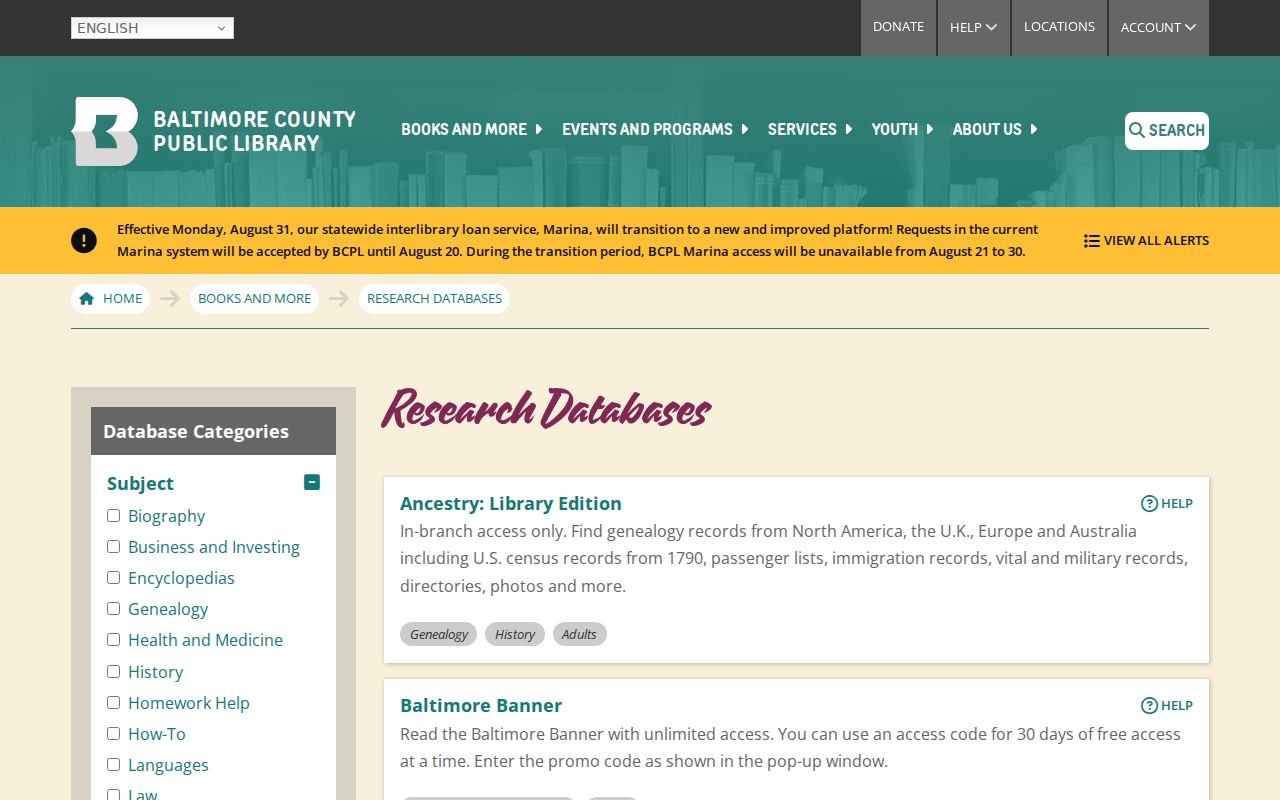
One access channel is rarely enough when a reel, year, or surname stays hidden online. The Baltimore County Public Library databases open several routes. These include Ancestry Library Edition, HeritageQuest, the Baltimore Sun, and Gale news. Ancestry Library Edition lives inside the branch. The other services set their own remote or library access conditions. BCPL also lists local-history collections and Digital Maryland material. Librarian help is available by email, chat, or appointment. The same BCPL genealogy databases page makes a practical starting point. It pairs census work with newspaper searches. It still cannot replace a directory reel or an original page image.
North Point is closed for renovation at present. Sollers Point, library reference service, eligible remote databases, DPNHS, and HSOBC fill the gap while that status holds. For physical materials, call BCPL about a reel or a year. Visits work too: Sollers Point, North Point after reopening, the MSA search room, Enoch Pratt, or the listed university collections. HSOBC accepts a paid mail research request, and DPNHS welcomes volunteer inquiries. A Maryland Public Information Act request under General Provisions §§4-101–4-601 can seek existing County-held historical records from the proper custodian. It cannot make an agency reconstruct a household from scattered collections.
Dundalk Files Beyond Directories
The Historical Society of Baltimore County keeps far more than its share of city directories. Surname files sit beside place and building vertical files. Maps, photographs, clippings, and ledgers round out the shelves. There is cemetery work, yearbooks, and runs of Maryland Historical Magazine too. A name pulled from a directory entry can grow into a fuller story here. Maybe it links to a whole county family. Maybe it ties to the history of one building. Staff do this work by hand. So requests land best when you bring alternate spellings, a tight date range, a street, and the exact record type you want.
The HSOBC holdings page shows just how wide these human-assisted collections run.
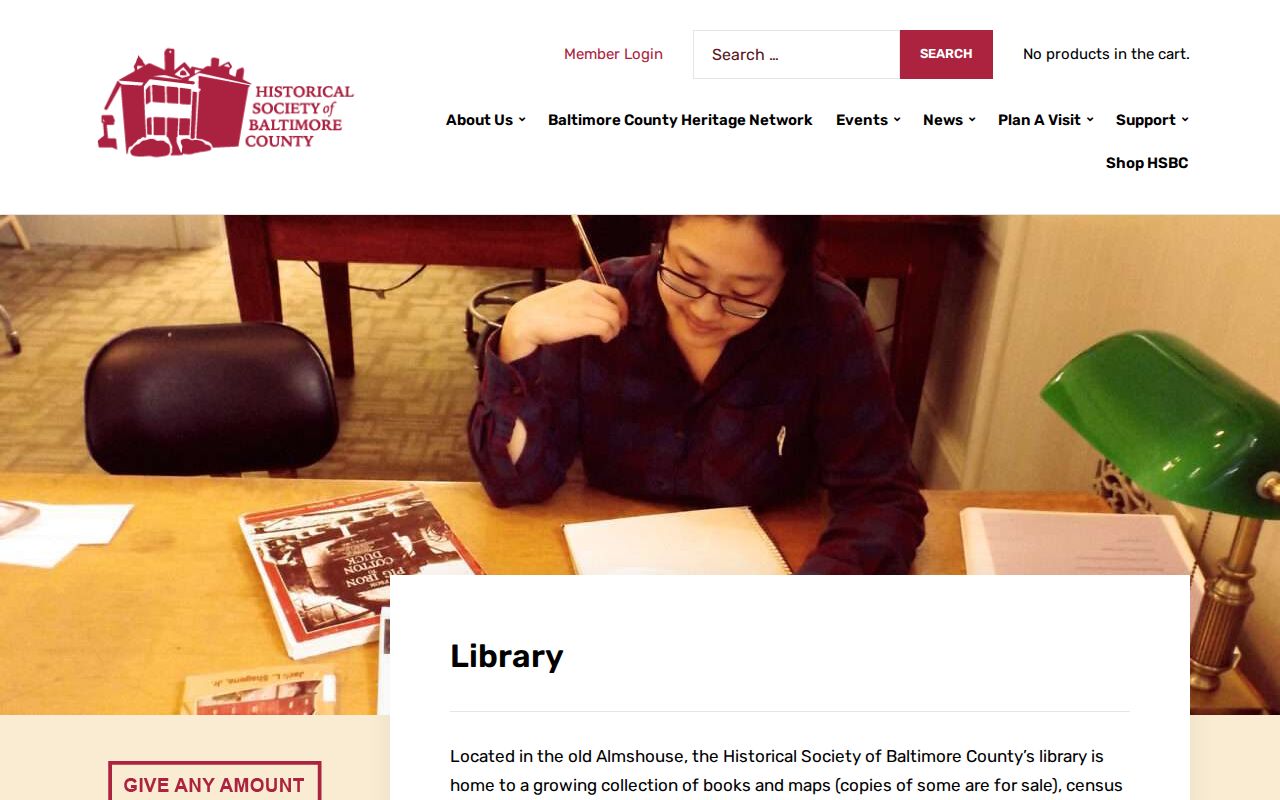
Plan visits carefully. HSOBC opens its reading room Fridays and Saturdays. It lends nothing, and it charges nonmembers an entrance fee. Separate rates apply to mail research. Confirm those terms before you go or order anything.
The Dundalk-Patapsco Neck Historical Society holds a rich set of materials. Researchers can browse Patapsco Neck clippings, obituaries, genealogy files, maps, original record books, oral histories, and newspaper microfilm. Its home at 4 Center Place has its own past. The building served the Dunleer Company in 1929. It became a public library in 1954. The society moved in during 1993, and the repository itself belongs to Dundalk's record trail.
Dundalk’s Railroad Directory Clue
Polk's 1901 locality section calls "Dundalk (village)" a stop on a railroad. The stop sits 8½ miles out on the Baltimore and Sparrows Point Railroad. That phrasing helps you place an entry in its own era. It is not a modern boundary. The railroad clue also explains a puzzle researchers hit often. Directories, industrial histories, and newspaper notices can all point at overlapping places. Later suburban titles do the same. None of them forms one municipal list.
Keep the period label when you search. Dundalk remains an unincorporated Baltimore County community. Its historic district spills slightly into Baltimore City. Pick the wrong jurisdiction and your directory or land-record search lands in the wrong collection.
Trace a Dundalk Directory Family
Family history works best as a dated chain, not a single answer. Start with a surname in one confirmed volume and record the entry exactly as printed. Then chase the next available year. Over time the chain reveals moves and new occupations. It also shows the shift from a bare locality listing to a numbered street. Spelling variants surface too, and later records may use them differently.
- Find the surname in a directory year whose locality coverage is confirmed, then copy the full printed entry and page.
- Follow the name through the next available years, recording each address, locality, occupation, and abbreviation as printed.
- For confirmed 1928-forward coverage, check the criss-cross section with the address and preserve all listed entries.
- Pair directory observations with the 1900 through 1950 federal census schedules, using the period’s geography rather than assuming a modern CDP label.
- Test the resulting timeline against dated newspapers, obituary or clipping files, deed records, permits, and telephone-directory presence.
A name can vanish for many reasons. The household moved. Someone died, or the spelling changed. A member went unlisted, or a publication gap skipped a year entirely. Census household composition and a dated newspaper notice make strong independent checks. For modern identity questions, use a controlled Dundalk resident lookup. Don't lean on an old listing alone.
Dundalk Directory Cross-Checks
A Dundalk residents directory works best alongside records that answer a different kind of question. Census schedules from 1900 through 1950 can pin down who lived in a household. They also show how old each person was. Newspapers add the dated events a directory never captures. BCPL newspaper resources, Gale news, and local microfilm may carry a move, death, marriage, school item, or club mention tied to a past resident. For obituaries and clippings, DPNHS and HSOBC hold useful files. No single complete Dundalk obituary index exists among the library titles.
Sanborn Fire Insurance Maps in the MSA collection cover Maryland from 1895 to 1956. They help date a building footprint, its use, a street label, or a house number. What they do not provide is a list of people. Historic district and Turner's Station surveys add building and community context around those names. Let each record support only the relationship it actually documents.